Launch offer — valid today only

📄 Digital book in PDF · read it on your phone or print it

Boat Wiring and Marine Electrical Certification, Illustrated: Trace Any Fault in 6 Steps One Topic on Every Page

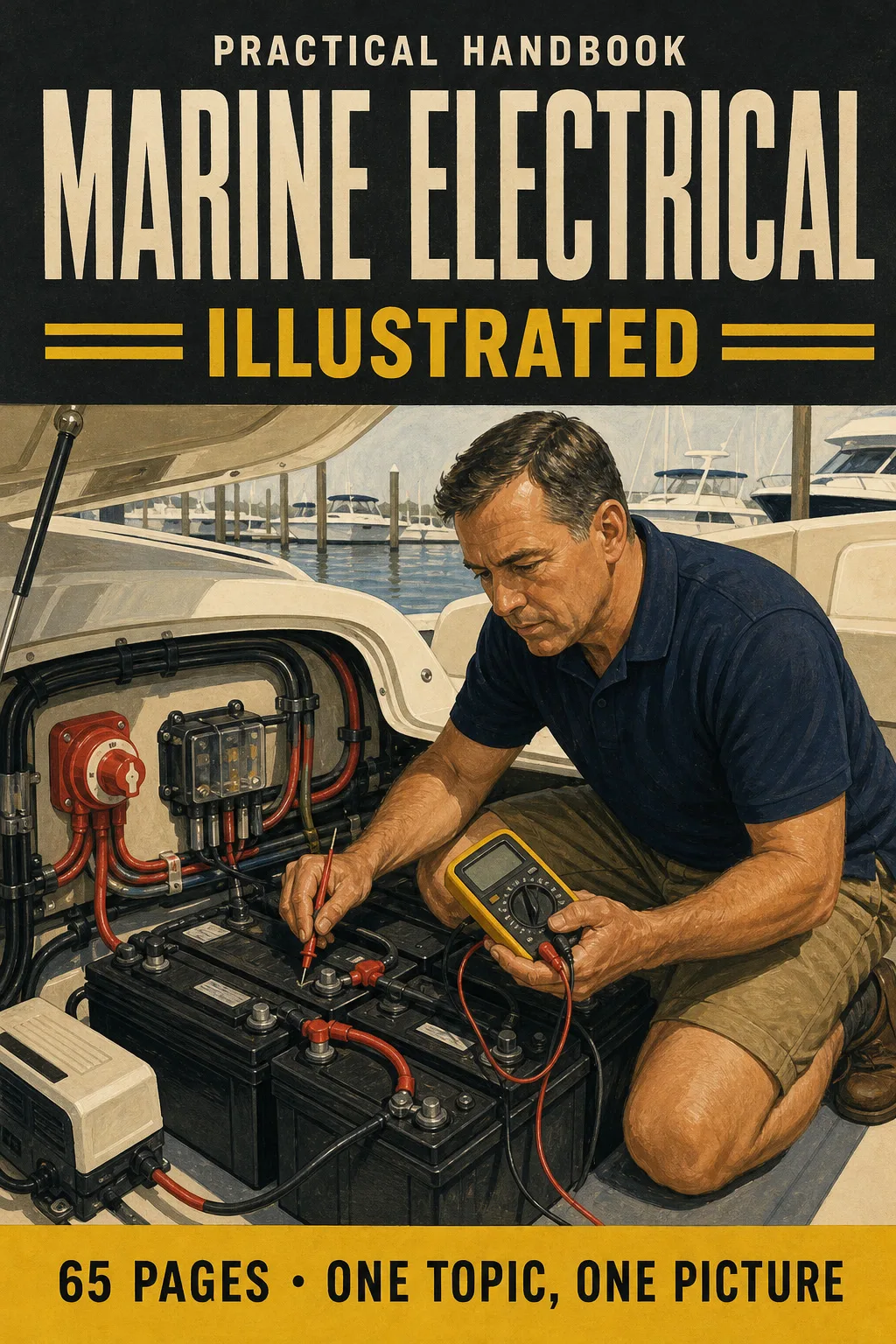
Ohm's law on a 12-volt boat, battery banks, wire sizing and voltage drop, fuse placement, shore power and the ELCI, grounding vs. bonding, galvanic corrosion and multimeter troubleshooting. Every topic gets its own page: first the drawing, then what you need to remember. 65 illustrated pages.

START STUDYING THIS WAY

🔒 Secure checkout · PDF by email · 30-day guarantee

Every topic, its own pageEach circuit and each rule drawn, with the explanation right beside it
65 illustrated pages8 parts, from Ohm's law on a 12-volt boat to the key numbers on one page
Up-to-date sourcesABYC standards (current edition), NEC Article 555 and 33 CFR 183
PDF by emailFormat

Look Inside the Book

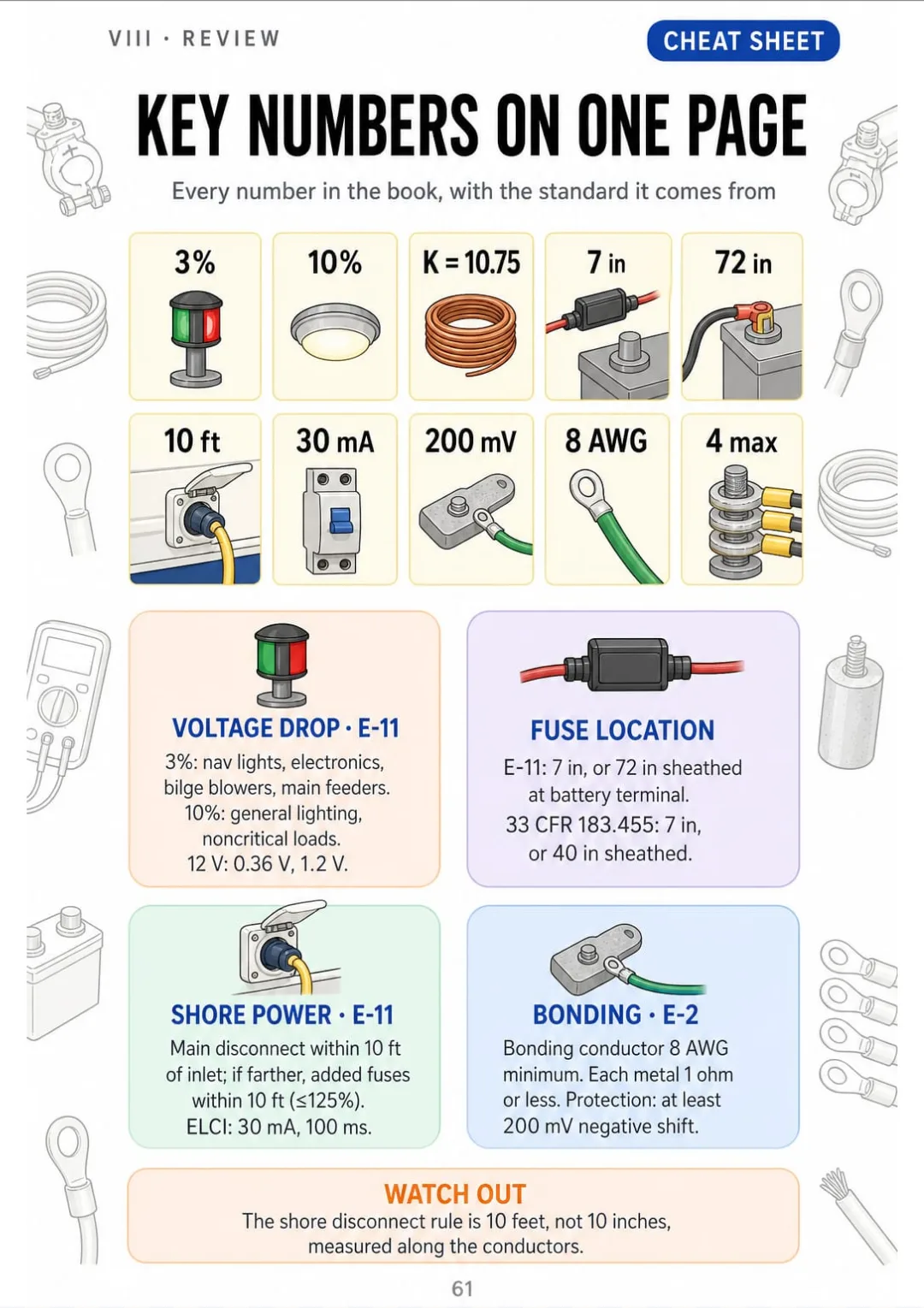
Every page has one big drawing and a box with the numbers and rules you need to know:

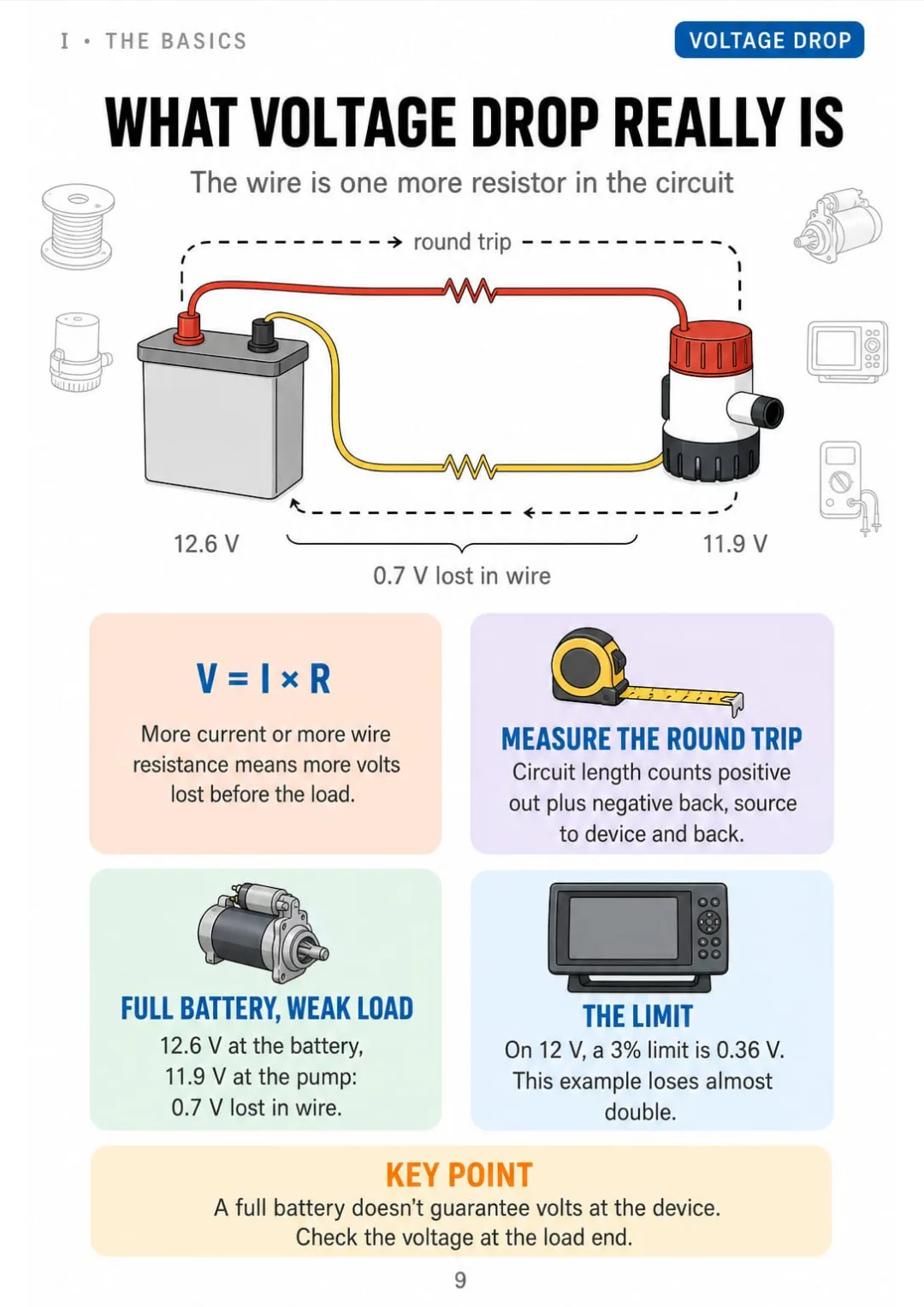
12.6 V at the battery, 11.9 V at the pump: 0.7 V lost in the wire
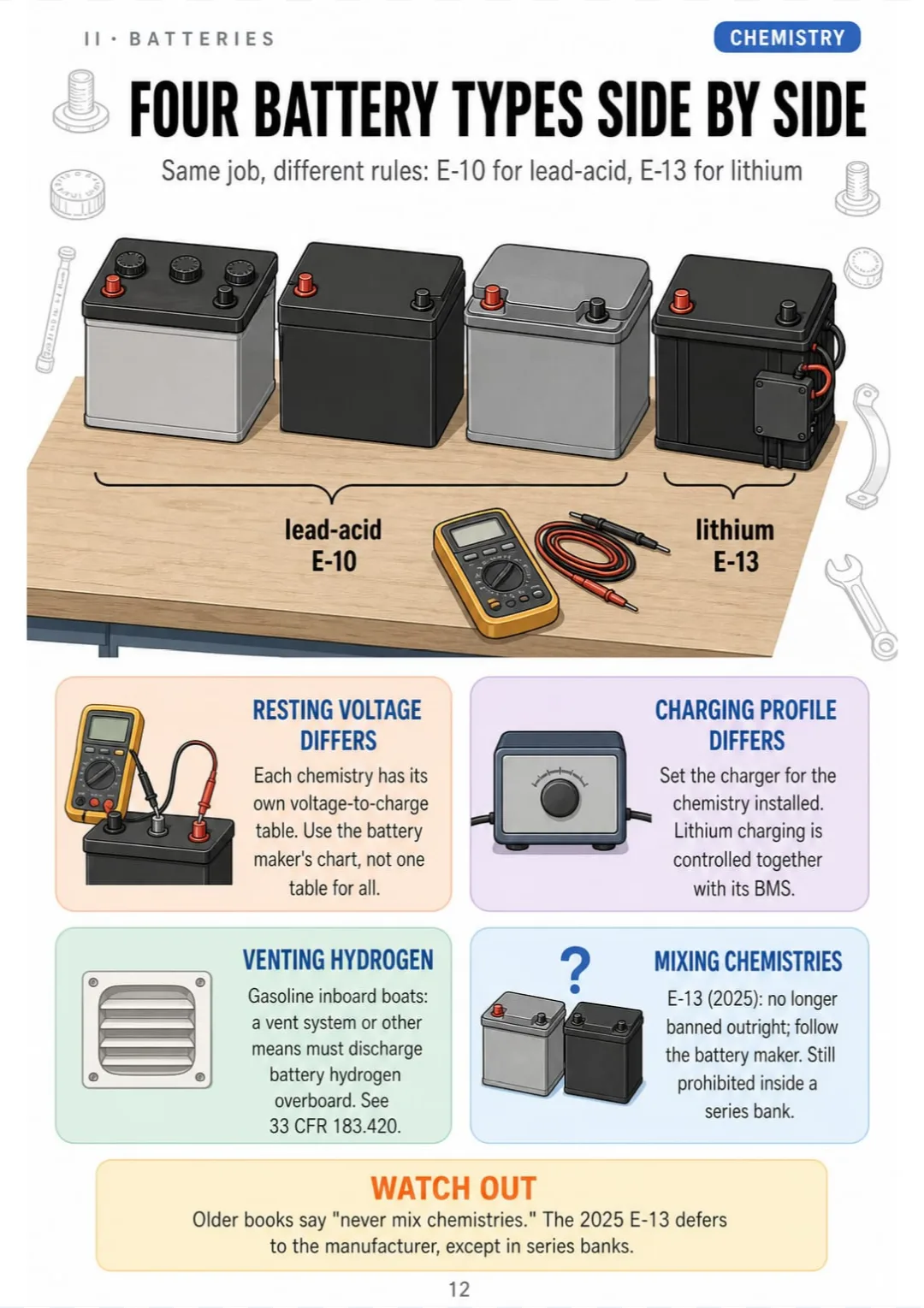
Flooded, AGM and gel follow E-10; lithium follows E-13 (2025 edition).
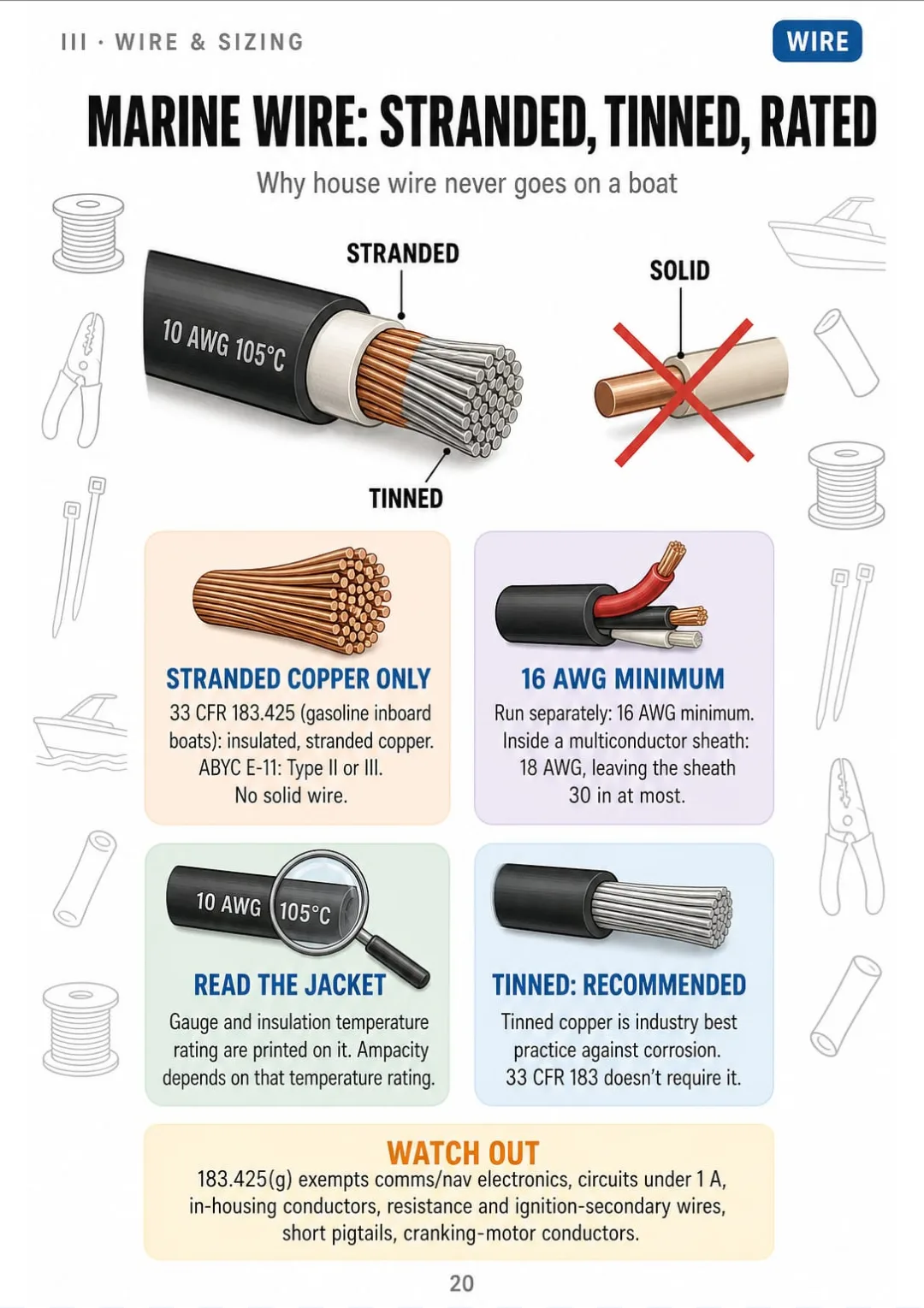
Stranded copper only · 16 AWG minimum (18 AWG sheathed) · read the temperature on the jacket
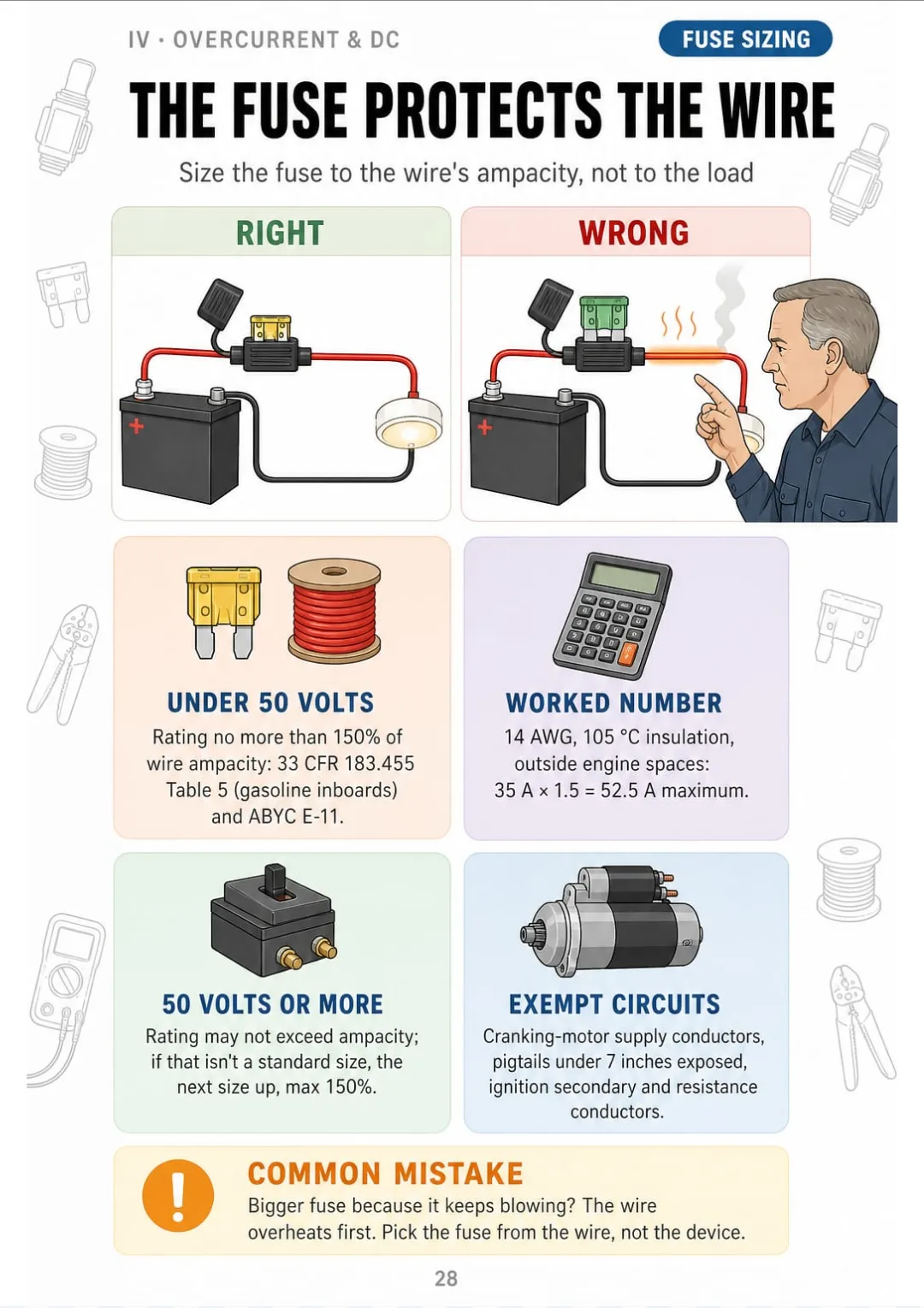
Under 50 V: fuse rating ≤ 150% of the wire's Table 5 ampacity, per 33 CFR 183.455.
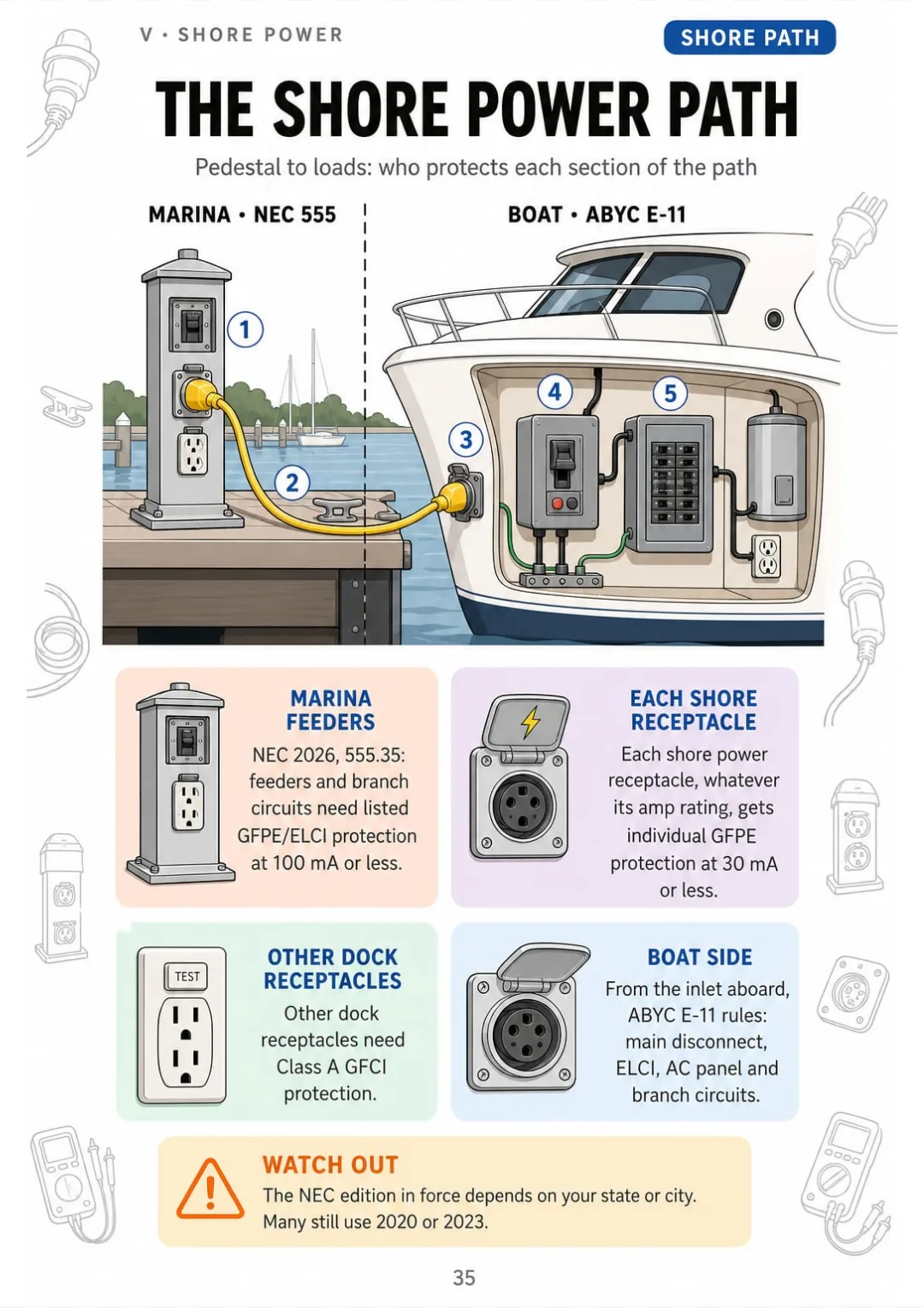
Pedestal → cord → inlet → main breaker → AC panel: NEC 555 on the dock, ABYC E-11 aboard.
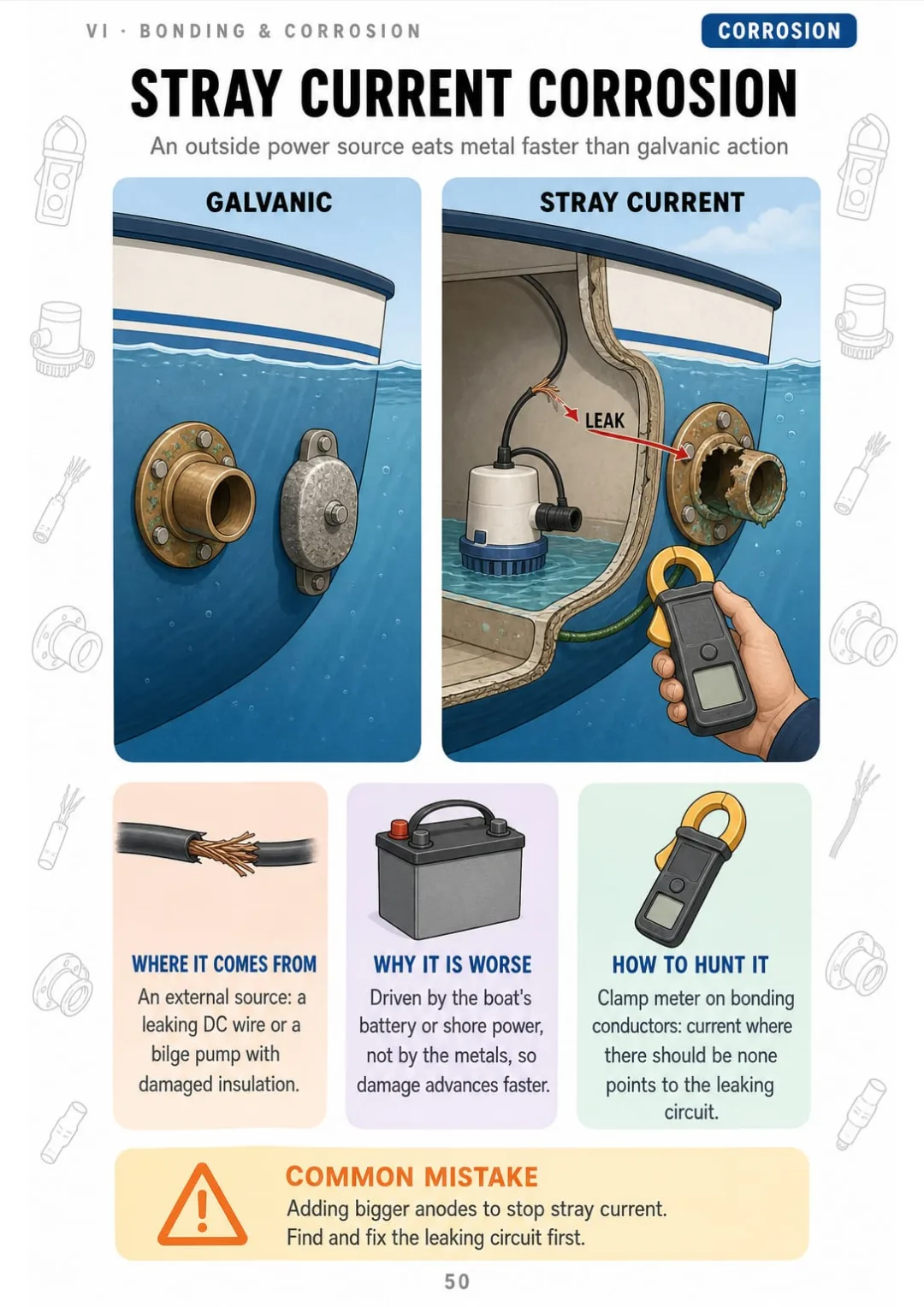
Stray current comes from a leaking circuit, not the metals; track it with a clamp meter.
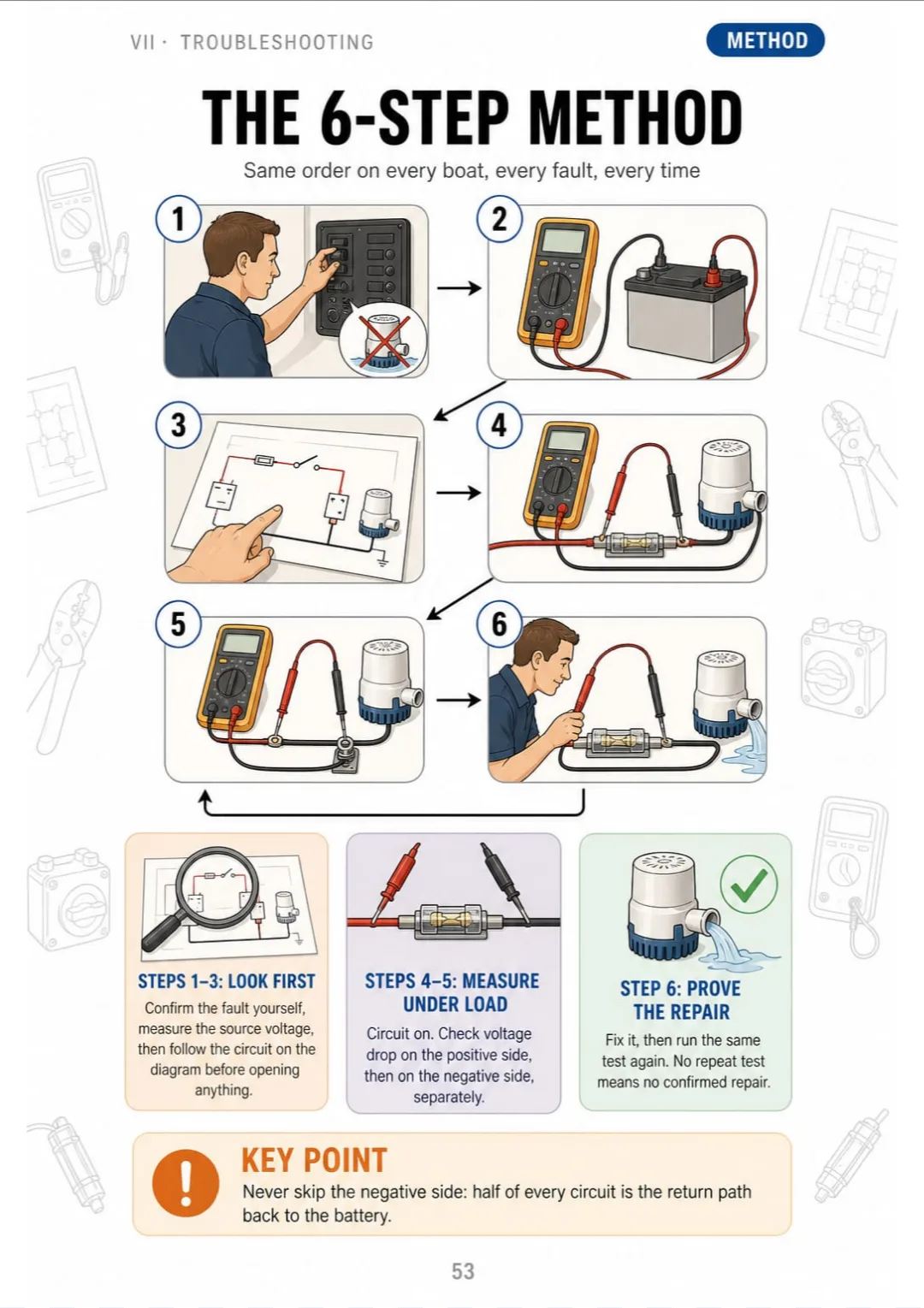
6 steps: confirm, source, diagram, positive drop, negative drop, repair and retest
3% / 10%, K = 10.75, 7 / 72 in, 10 ft, 30 mA, 200 mV, 8 AWG: one page

Swipe to see more →

These are real pages from the book. The table of contents is the full one: 8 parts and 61 topics.

The Problem Isn't You. It's How It Was Explained to You.

You're rewiring a bilge pump on a customer's boat and you grab the spool from the truck. Is it the right wire? Stranded or solid, tinned or bare, what minimum gauge, what temperature rating?

You've read this before. But the manual covers conductors in long paragraphs full of exceptions and footnotes, so on the dock none of it comes back.

Stranded copper only · 16 AWG minimum (18 AWG sheathed) · read the temperature on the jacket

In the book, marine wire is one page: a cutaway of the fine strands, the tinned copper, the jacket with the rating printed on it. Stranded copper only, 16 AWG minimum (18 AWG if sheathed), and read the temperature on the jacket.

The rest works the same way: the fuse that protects the wire, the shore power path, grounding vs. bonding, battery banks in series and in parallel, the 6-step fault method. Each one has its own page.

You look at it, it makes sense, and you pick the right wire without going back to the manual.

COMPARE FOR YOURSELF

Same Topic, Two Ways to Study It

THIS
  • The manual: line after line after line
  • Battery chemistries explained only in words
  • You walk into the exam still unsure
Storage batteries installed aboard may be of the flooded (vented) lead-acid, absorbed glass mat or gelled electrolyte type, each subject to the applicable installation, ventilation and securing requirements of the relevant standard, whereas lithium-ion chemistries, owing to their distinct thermal runaway characteristics and the requirement for an integrated battery management system, fall under a separate standard and shall be evaluated with respect to charging parameters, overcurrent protection, temperature limits and manufacturer specifications prior to installation, notwithstanding any similarity in physical form factor.
FOR THIS
  • Four battery types in one drawing
  • The standard for each one in a box
  • You see it and it makes sense
Flooded, AGM and gel follow E-10; lithium follows E-13 (2025 edition).
CONTENTS

Take a Look at the 8 Parts and 61 Topics

The basics, batteries and charging, wire and sizing, overcurrent protection, shore power, grounding and corrosion, troubleshooting in 6 steps and a quick reference: 65 pages, all illustrated

IThe Basics, Boat-Style · pp. 5-11
  1. How the ABYC Standards Are Organized
  2. Ohm's Law on a 12-Volt Boat
  3. Watts to Amps: Sizing the Load
  4. Series vs. Parallel Circuits
  5. What Voltage Drop Really Is
  6. DC and AC Aboard: Two Systems, One Boat
  7. Reading a Boat Wiring Diagram
IIBatteries and Charging · pp. 12-19
  1. Battery Types: Flooded, AGM, Gel, Lithium
  2. State of Charge by Resting Voltage
  3. Battery Banks in Series
  4. Battery Banks in Parallel
  5. Battery Installation Per E-10
  6. Battery Switches and Disconnects
  7. Charging Sources: Alternator, Charger, Solar
  8. Isolators, ACRs and DC-DC Chargers
IIIWire, Terminals and Sizing · pp. 20-27
  1. Marine Wire: Stranded, Tinned, Rated
  2. DC Color Codes
  3. Ampacity: Inside vs. Outside Engine Spaces
  4. Derating Bundled Conductors
  5. The 3% and 10% Rule
  6. Worked Example: Sizing for Voltage Drop
  7. Ampacity First, Then Voltage Drop
  8. Crimps, Terminals and Heat Shrink
IVOvercurrent Protection and DC Distribution · pp. 28-34
  1. The Fuse Protects the Wire
  2. Where the Fuse Goes: 7 and 72 Inches
  3. Fuses vs. Breakers: Types and Ratings
  4. The DC Main Panel
  5. Bus Bars and the DC Negative
  6. Ignition Protection in Gasoline Engine Spaces
  7. Wire Routing and Support
VShore Power and AC Systems · pp. 35-43
  1. The Shore Power Path
  2. 30 A vs. 50 A Plugs and Cords
  3. Hot, Neutral, Ground: AC Color Code
  4. The Main Shore Power Disconnect
  5. ELCI: What It Is and What It Detects
  6. Neutral and Ground Join Only at the Source
  7. Source Selection: Shore, Generator, Inverter
  8. Isolation Transformers
  9. Inverters and Chargers on the AC Side
VIGrounding, Bonding and Corrosion · pp. 44-52
  1. Grounding vs. Bonding: Side by Side
  2. The Bonding System Layout
  3. The Galvanic Series
  4. Galvanic Corrosion: How the Cell Works
  5. Choosing Anodes: Zinc, Aluminum, Magnesium
  6. Measuring Hull Potential
  7. Stray Current Corrosion
  8. Galvanic Isolators
  9. Lightning Protection Basics
VIITroubleshooting in 6 Steps · pp. 53-60
  1. The 6-Step Method
  2. Your Multimeter, Set Up Right
  3. Voltage Drop Testing Under Load
  4. Continuity and Resistance Tests
  5. Finding a Parasitic Draw
  6. Testing Shore Power Polarity
  7. When the ELCI Trips at the Dock
  8. Engine Won't Crank: The Starting Circuit
VIIIReview and Quick Reference · pp. 61-65
  1. Key Numbers on One Page
  2. Grounding, Bonding, Neutral: Don't Mix Them Up
  3. Common Mistakes on Exam-Style Questions
  4. Inspection Walkthrough: DC, AC, Bonding
  5. Before You Open the Next Boat

One Page, One Topic, All Clear

Think of it this way:

You're on the dock. You plug in shore power and the ELCI trips. The owner is standing right behind you, waiting.

You open the shore power page and see the whole path drawn end to end: pedestal, cord, inlet, main breaker, AC panel. The ELCI page shows what it measures, the 30 mA it trips at, and where to start looking.

Pedestal → cord → inlet → main breaker → AC panel: NEC 555 on the dock, ABYC E-11 aboard.

Same with battery banks, wire sizing, the 7 and 72 inch fuse rules, the bonding system and the galvanic series: each one on its own page.

Marine Electrical Illustrated is 65 illustrated pages in 8 parts, one topic per page, ending with the key numbers on one page, common mistakes on exam-style questions and an inspection walkthrough.

What you see drawn, you don't have to memorize.

What's Inside Marine Electrical Illustrated:

Ipp. 5-11

The Basics, Boat-Style

How the ABYC standards are organized, Ohm's law on a 12-volt boat, watts to amps, series vs. parallel, voltage drop, DC and AC aboard and reading a wiring diagram

IIpp. 12-19

Batteries and Charging

Flooded, AGM, gel and lithium, state of charge by resting voltage, banks in series and in parallel, installation per E-10, switches, charging sources, isolators, ACRs and DC-DC chargers

IIIpp. 20-27

Wire, Terminals and Sizing

Pick the right wire and size it yourself: stranded tinned wire, DC color codes, ampacity inside and outside engine spaces, derating, the 3% and 10% rule on a worked example, crimps and heat shrink

IVpp. 28-34

Overcurrent Protection and DC Distribution

Why the fuse protects the wire, the 7 and 72 inch rules, fuses vs. breakers, the DC main panel, bus bars, ignition protection and wire routing

Vpp. 35-43

Shore Power and AC Systems

Know every step from the pedestal to the panel: the shore power path, 30 A vs. 50 A, the AC color code, the main disconnect, the ELCI, where neutral and ground join, source selection, isolation transformers and inverters

VIpp. 44-52

Grounding, Bonding and Corrosion

Grounding vs. bonding side by side, the bonding layout, the galvanic series, how the corrosion cell works, choosing anodes, hull potential, stray current, galvanic isolators and lightning

VIIpp. 53-60

Troubleshooting in 6 Steps

Find the fault in the same order on every boat: the 6-step method, multimeter setup, voltage drop under load, continuity, parasitic draw, shore power polarity, the ELCI that trips and the engine that won't crank

VIIIpp. 61-65

Review and Quick Reference

Key numbers on one page, grounding vs. bonding vs. neutral, common mistakes on exam-style questions, an inspection walkthrough and a check before the next boat

At the end of the book: Key numbers on one page, an inspection walkthrough and a review of common mistakes on exam-style questions.
Plus: 2 Free Books

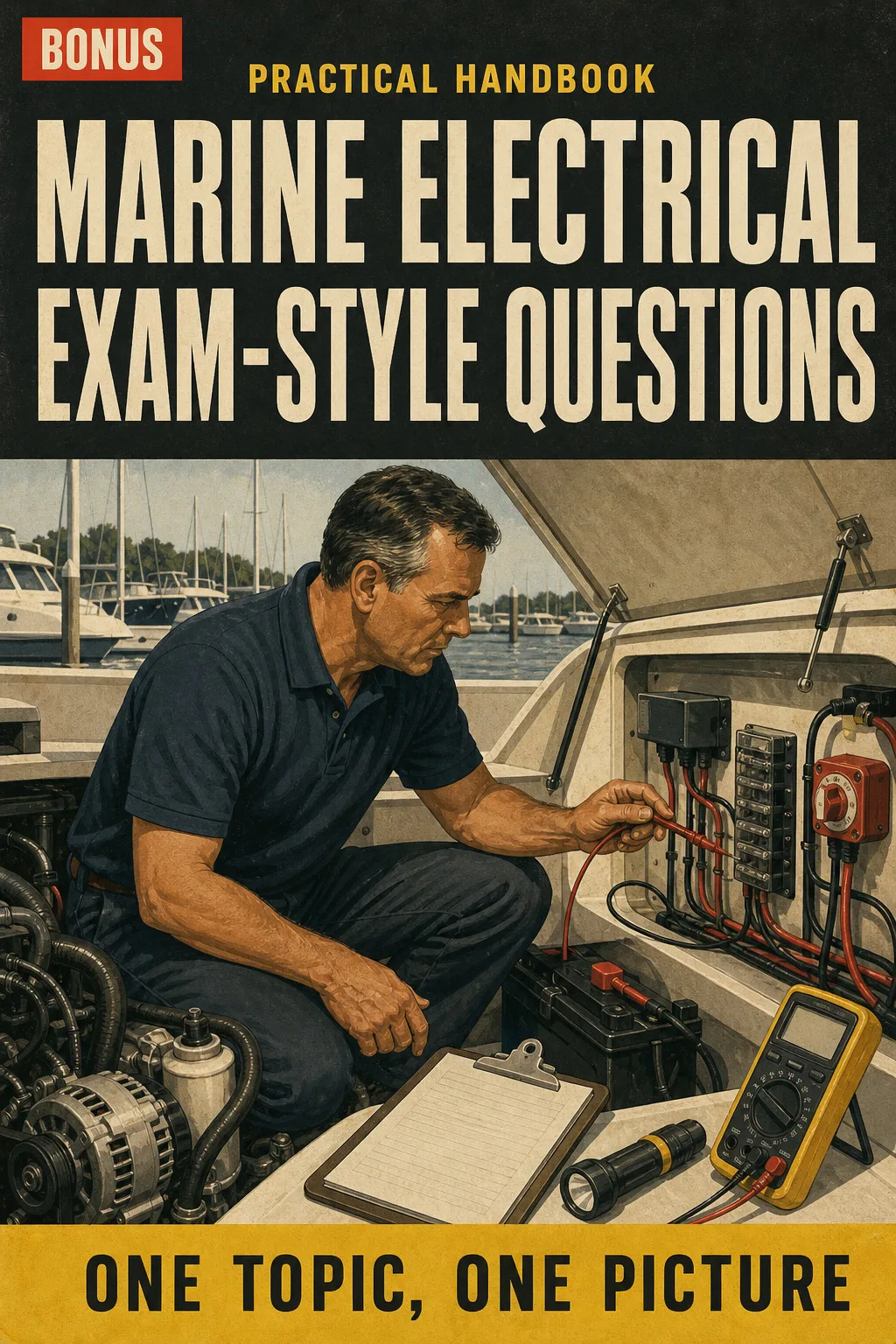
Marine Electrical Exam-Style Questions

BONUS 1: «Marine Electrical Exam-Style Questions»

Value on its own: US$ 17.90

Test yourself on wire sizing, shore power, corrosion and overcurrent protection with exam-style questions, each one answered and explained, so you find your weak spots before exam day.

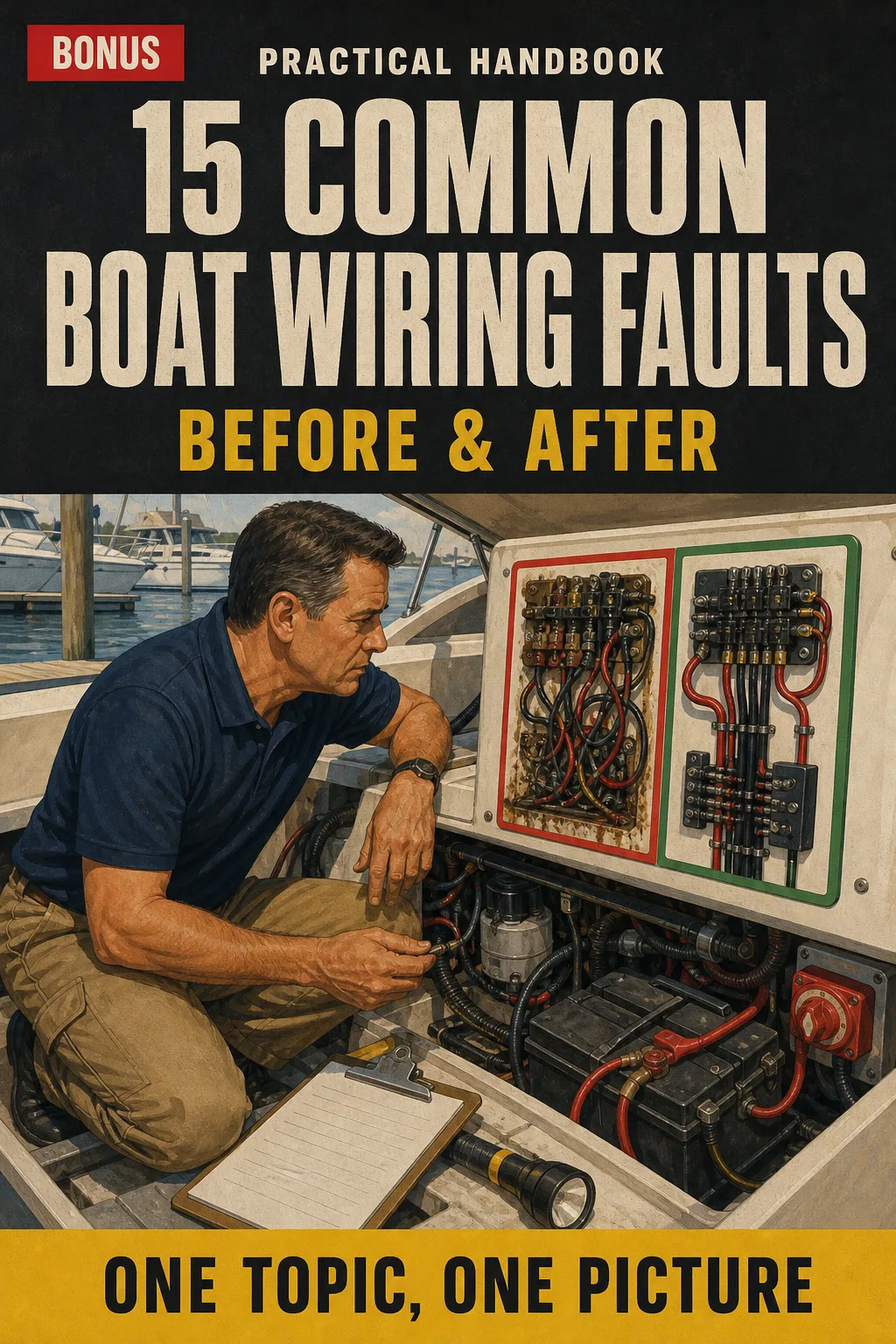
15 Common Boat Wiring Faults: Before & After

BONUS 2: «15 Common Boat Wiring Faults: Before & After»

Value on its own: US$ 14.90

See the wiring mistakes that come up most often on boats drawn wrong and then drawn right, from loose crimps to a missing fuse at the battery, so you spot them on the next boat you open up.

Marine Electrical Illustrated with 2 Free Books

  • Marine Electrical Illustrated: 65 illustrated pagesUS$ 63
  • BONUS 1: Marine Electrical Exam-Style QuestionsUS$ 17.90
  • BONUS 2: 15 Common Boat Wiring Faults: Before & AfterUS$ 14.90
  • High-resolution PDF to printIncluded
Total value US$ 95.80
YOUR PRICE:
US$ 27
You save US$ 68.80
YES, I WANT MARINE ELECTRICAL ILLUSTRATED FOR US$ 27

📄 This is a digital PDF book sent to your email: nothing is printed or shipped.

Secure purchaseEncrypted payment30-day guarantee

PDF by email: We email you Marine Electrical Illustrated as a PDF, together with the two free books. It's a single payment: no installments, no extra charges.

Who This Book Is For

You're coming from residential electrical work

You're coming from residential electrical work

What changes on a boat, page by page: stranded wire only, NEC 555 on the dock and E-11 aboard, and grounding vs. bonding drawn side by side.

Your certification exam is coming up

Your certification exam is coming up

The key numbers on one page, a review of common mistakes and exam-style questions to find your weak spots before exam day.

You already work on boats

You already work on boats

Print it and keep it in the truck: the 6-step method and the quick reference are there when the owner is watching.

Everything You Get Today

US$ 95.80US$ 27
YES, I WANT MARINE ELECTRICAL ILLUSTRATED FOR US$ 27

📄 This is a digital PDF book sent to your email: nothing is printed or shipped.

30DAYS
GUARANTEE

30-Day Guarantee

Try Marine Electrical Illustrated for 30 days, bonus books included.

We refund everything if the file won't open, if the book isn't what you see here, if you were charged twice or if the email doesn't arrive. Just email us.

You pay once. No subscriptions.

Frequently Asked Questions

Is it for me if I already work on boats and want the certification?

Yes. It's built on the same ABYC standards marine electrical certification is based on (E-11, E-10, E-13, E-2, A-28, A-31, TE-4), not on general boating tips. There are no 40 pages on what a volt is: Ohm's law gets one page, worked on a 12-volt boat. The rest goes straight to batteries, wire sizing, shore power, bonding and troubleshooting.

Where does the content come from?

From the current edition of the ABYC standards (E-11, E-10, E-13, E-2, A-28, A-31, TE-4), NEC Article 555 for the marina side and 33 CFR 183. Every page shows the standard and section it comes from, so you can check it against the copy at your shop. Tables are redrawn and paraphrased, not copied.

Is this official material?

No. It's independent study material, not affiliated with or endorsed by ABYC or any certifying body. It doesn't come with a certificate or continuing-education credits: the certification itself is earned through the certifying body's exam. This book is what you study and review with before it.

Does it replace a course or hands-on training?

No. It's a visual study and review aid. It doesn't replace a certification course, hands-on training or the current standard itself.

Are the practice questions the ones on the exam?

No. The exam-style questions were written for this book. They are not official questions from any exam.

When and how do I get it?

As a PDF by email, to the address you enter at checkout: the book and the 2 bonus books. If it isn't in your inbox, check spam or promotions. If it never arrived, write to us and we'll refund you in full.

Do I have to pay every month?

No. It's a one-time payment.

Can I get it on paper?

It's a PDF made to print. Print the whole book, or just the pages you want in the truck or the toolbag.

How does the refund work?

You have 30 days. We refund everything if the file won't open, if the book isn't what you see on this page, if you were charged twice or if the email doesn't arrive: just email us.

Before You Close This Page

No more rereading the standard and losing it by morning.

The shore power path: you see it drawn, and that's it.

You show up to the exam, or the next boat, knowing where everything is.

Drawings make studying faster.

The book is right below.

One-time payment: US$ 27 · Guarantee: 30 days · PDF by email

YES, I WANT MARINE ELECTRICAL ILLUSTRATED FOR US$ 27

📄 This is a digital PDF book sent to your email: nothing is printed or shipped.